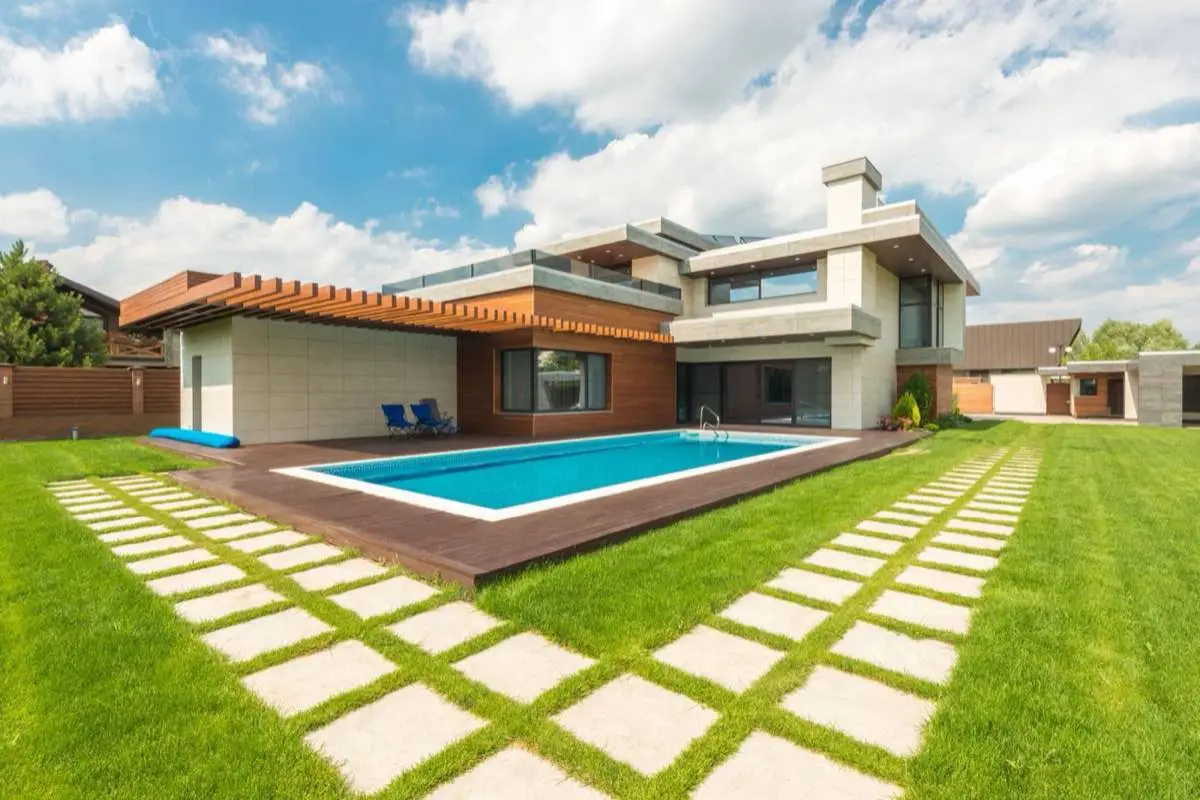
Pool heater cost breaks down like this: $3,500 to $7,000 installed for gas, $4,000 to $7,500 for a heat pump, $3,000 to $8,000 for solar. Running cost is where they separate — roughly $5 to $8 an hour for gas, under a dollar an hour for a heat pump, and nothing at all for solar.
Which means the sticker price is almost the least interesting number here. You are choosing an operating cost you will live with for a decade, and most people pick the heater based on the install quote and then get surprised by a gas bill in April.
The three real options
| Gas | Heat pump | Solar | |
|---|---|---|---|
| Installed cost | $3,500–$7,000 | $4,000–$7,500 | $3,000–$8,000 |
| Running cost per hour | $5–$8 natural gas, $11–$15 propane | $0.60–$0.90 | $0 |
| Heats a 20k gal pool 10°F in | 5–6 hours | 13–18 hours | Days, weather-dependent |
| Works when air is cold | Yes, any temperature | Poorly below about 50°F | No |
| Lifespan | 7–12 years | 10–15 years | 15–20 years |
| Best for | Occasional, on-demand heat | Holding a temperature all season | Free extra degrees in shoulder season |
The math behind those numbers
It is worth seeing, because it explains everything about how these things behave.
One BTU raises one pound of water one degree. A 20,000 gallon pool weighs about 166,800 pounds, so a 10-degree rise takes roughly 1.67 million BTU. A 400,000 BTU gas heater running at around 80 percent thermal efficiency delivers about 320,000 BTU an hour, so it gets there in five to six hours of burn. A 125,000 BTU heat pump delivers what it says, and takes thirteen-plus hours.
That difference is not a flaw. It is the whole design philosophy. Gas heaters are meant to be off, then fired up when guests are coming Saturday. Heat pumps are meant to be left on, sipping electricity, holding 86 degrees from March through November.
Pick the one that matches how you will actually behave, not how you imagine you will behave.
Sizing: the rule and the reason
The working formula is pool surface area in square feet, times the temperature rise you want, times 12 — that gives BTU per hour to get there in roughly 24 hours.
A 16x32 pool is 512 square feet. Want 20 degrees of rise? 512 × 20 × 12 = about 123,000 BTU/hr for a full-day heat-up, and you would size a gas heater considerably above that for faster recovery.
Undersizing is the more common mistake, and it is the expensive one, because an undersized heater runs constantly and never quite gets there. Oversizing a gas heater costs more up front and almost nothing to operate — it just runs less often.
The retrofit costs nobody quotes on the phone
Adding a heater to an existing pool is where budgets slip:
- Gas line sizing. A 400,000 BTU heater is a serious appliance. Existing three-quarter inch lines often cannot feed it at the required pressure, and running a properly sized line can add $500 to $2,000.
- Electrical. Heat pumps need a dedicated circuit, typically 40 to 60 amps, plus bonding per the National Electrical Code. A panel that is already full adds cost fast.
- Plumbing and pad space. Some equipment pads have room, some need reworking.
- Roof structure for solar. Panels need roof area roughly half to equal your pool's surface area, facing the right way, and the roof has to be in good enough shape to justify mounting on.
Get all of that on the written quote. A heater price without the gas and electrical scope is not a quote, it is an opening bid.
Our actual recommendation
If you swim regularly and want a long season, get the heat pump. In a climate like the Santa Clarita Valley's, where air temperatures stay warm enough for a heat pump to work efficiently through most of the shoulder season, the running-cost gap is enormous — a full season of heat pump operation often costs less than a month of aggressive gas heating. Over a 12-year life that difference dwarfs the install price.
Get gas only if you heat occasionally and need it now. A vacation home, a pool used for parties, a spa you want hot in 30 minutes. That is a legitimate use case and heat pumps are genuinely bad at it.
Get solar if you have the roof and want the shoulder season for free. It typically adds 10 to 15 degrees over ambient during sunny months, costs nothing to run, and is the only option here with no operating cost at all. It just cannot deliver a number on demand.
When you should not buy a heater at all
Honestly, a lot of people in warm markets do not need one.
If your pool sits in full sun and you only swim June through August, buy a solar cover instead. A $150 to $400 cover will hold heat overnight and add several degrees on its own, and evaporation — which the U.S. Department of Energy identifies as the largest single source of pool heat loss — mostly stops while it is on. Try that for one season before spending $6,000.
If your pool is heavily shaded, do the tree work before the heater. Four hours of direct sun is worth more than a heater running against a shaded pool that loses it all back overnight.
The failure we see most
Heat exchangers eaten by low pH. A gas heater's exchanger is copper, and water that sits below 7.2 pH for months is corrosive to it. The heater runs fine, then one spring it does not, and the exchanger is a $700 to $1,400 part on a unit that might not be worth it.
The prevention is boring: keep pH at 7.4 to 7.6 and calcium hardness at 200 to 400 ppm. Same chemistry that protects your plaster protects your heater. This is one of the practical reasons a weekly service plan pays for itself on pools with expensive equipment.
Santa Clarita Pool Builders installs and repairs pool heaters and equipment across Santa Clarita and the Santa Clarita Valley, gas and heat pump, on new builds and retrofits. We will also tell you if a cover solves your problem for $200. For the rest of the running-cost picture, see our monthly pool maintenance cost breakdown, or call (888) 572-3598.
Get a free quote → · call (888) 572-3598
Ready for a free quote in Santa Clarita?
Santa Clarita Pool Builders — free estimate, clear scope, no pressure. Use the form on this page or jump to the homepage quote.
Related services in Santa Clarita
Santa Clarita Pool Builders money pages — go straight to the service you need.
- Pool Remodeling & Renovation →
Santa Clarita Pool Pros remodels tired valley pools when wind, heat, and dated equipment make the yard feel abandoned mid-summer. Remodels start with structure and plumbing pressure, not tile boards.
- Spa & Hot Tub Installation →
Santa Clarita Pool Pros builds spas that stay useful when canyon winds drop evening temperatures fast. Heat loss and wind are the design drivers, not only jet diagrams.
- Pool Heaters & Heat Pumps →
Pool heaters extend a Santa Clarita swim season from roughly five months to nine or ten, and they are the entire reason a spa is worth having between November and March. Our summers do not need help, but the shoulder seasons are long, sunny, and about eight degrees short of comfortable, and the valley cools off hard after sunset even in June because of the dry air.
- Weekly Pool Cleaning & Service →
Weekly service in the Santa Clarita Valley is really two jobs, and most route plans only price one of them. The chemical half is predictable arithmetic.
- Gunite & Shotcrete Pool Construction →
Gunite and shotcrete pool construction is what nearly every custom pool in the Santa Clarita Valley is built from, because it is the only method that will take the shape a sloped or awkward lot actually allows. We tie a steel rebar cage, pneumatically place the shell, and wet-cure it properly — which in 105-degree SCV heat means actively keeping it wet rather than letting it flash off and look finished by dinnertime.
Frequently asked questions
How much does it cost to install a pool heater?
Gas heaters run $3,500 to $7,000 installed, heat pumps $4,000 to $7,500, and solar systems $3,000 to $8,000. Retrofits on an existing pool cost more than heaters installed during construction, mostly because of gas line sizing and electrical work.
What is cheaper to run, a gas pool heater or a heat pump?
A heat pump, by a wide margin. A 400,000 BTU natural gas heater burns about 4 therms an hour, roughly $5 to $8. A heat pump doing the same job pulls about 5 kilowatts, roughly $0.60 to $0.90 an hour. Gas buys you speed; the heat pump buys you a cheaper season.
How long does it take to heat a pool?
Depends on the heater. A 400,000 BTU gas heater raises a 20,000 gallon pool about 10 degrees in five to six hours. A 125,000 BTU heat pump takes 13 to 18 hours for the same rise, which is why heat pumps are run continuously to hold a temperature rather than fired up for a weekend.
Do I need a pool heater in the Santa Clarita Valley?
Often not for the peak of summer. What a heater actually buys most owners here is April, May, October, and sometimes November — two to three extra months of swimming. If you only ever swim in July, a solar cover for $150 will do.
How long do pool heaters last?
Gas heaters typically last 7 to 12 years, heat pumps 10 to 15, and solar panels 15 to 20. Water chemistry shortens all three. Low pH is what eats gas heater heat exchangers, and it is the most common cause of an early failure we see.
Does a pool cover really help with heating?
More than any equipment upgrade. Evaporation is the single largest source of heat loss from a pool, and the U.S. Department of Energy identifies covers as the most effective way to cut pool heating costs. A cover costs a few hundred dollars and does more per dollar than anything on your equipment pad.
Local context
How this applies in Santa Clarita, CA
Every article here is written from pool work done in Santa Clarita and the Santa Clarita Valley, so the numbers reflect local labour, permit and material costs rather than a national average. Your own job can land either side of them depending on access, the condition of what is already there, and the materials you pick — gunite and shotcrete construction, PebbleTec and pebble aggregate finishes, polished quartz plaster.
The way to turn any of this into a real answer is to have someone look at your actual situation. The free estimate is free, itemized and written down, with no deposit and no obligation. Call (888) 572-3598 or start on the Santa Clarita Pool Builders homepage.
Areas Santa Clarita Pool Builders covers
Santa Clarita first, then the surrounding communities of the Santa Clarita Valley. Each has its own page with local detail rather than a copy of this one:
- Valencia, CA — Los Angeles County, population 60,000
- Newhall, CA — Los Angeles County, population 29,000
- Saugus, CA — Los Angeles County, population 34,000
- Canyon Country, CA — Los Angeles County, population 50,000
- Stevenson Ranch, CA — Los Angeles County, population 26,000
- Castaic, CA — Los Angeles County, population 19,000
Or jump to the full list of Santa Clarita services.
More from the Santa Clarita Pool Builders blog
- Pool Deck Ideas for Santa Clarita Backyards That Hold Up
Pool deck ideas for Santa Clarita, CA — concrete, pavers, travertine and coatings compared on cost, foot temperature, and slip rating.
- Inground Pool Monthly Maintenance Cost: Santa Clarita
What an inground pool really costs per month in Santa Clarita, CA — chemicals, power, water, weekly service rates, and the repair fund nobody budgets for.
- Above Ground vs Inground Pool: Santa Clarita Tradeoffs
Above ground vs inground pool in Santa Clarita, CA — honest cost ranges, lifespan, resale reality, and code requirements you cannot skip.
The Santa Clarita Pool Builders Team
pool specialists serving Santa Clarita, CA
Written by the Santa Clarita Pool Builders team — insured pool pros with 15+ years serving Santa Clarita, CA and the surrounding area.